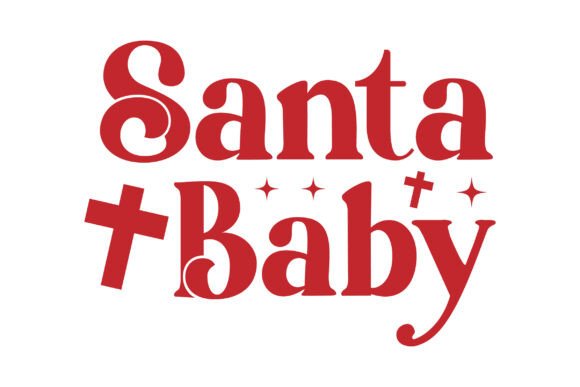
Santa Baby Retro Christmas SVG Design Review
As a designer who spends half my life staring at stitch density charts and the other half trying to convince clients that embroidery is worth the premium price tag, I don’t just look at a design file. I look at how it will behave under the needle. When Santa Baby Retro Christmas SVG Design landed on my desk for evaluation, my first thought wasn’t about the holiday spirit—it was about execution. Could this actually work as a commercial product? Would it hold up in a real-world scenario, or would it turn into a tangled mess of thread on a busy Saturday morning?
This review breaks down exactly what you need to know before you upload this file to your machine or list it in your Etsy shop. We are looking at this through the lens of practical application, visual appeal, and business viability.
The First Impression: Mood and Visual Personality
The moment you open the file, the retro aesthetic hits you. This isn’t your standard, stiff clip-art Santa. The design leans heavily into a vintage, mid-century vibe that feels playful yet polished. For an embroidery project, this distinction matters immensely. Retro styles often rely on clean lines and bold shapes rather than intricate, tiny details that can get lost in fabric texture.
The mood is festive but not cheesy. It strikes a balance that appeals to modern crafters and boutique owners who want something that looks curated rather than mass-produced. When I visualize this on a finished product, I see immediate potential for high-engagement items. The visual personality suggests a product that belongs in a trendy home decor setting or on high-quality apparel, rather than a cheap giveaway item. It has a "shelf-appeal" quality that translates well to social media mockups, which is crucial for any Etsy seller or small shop product looking to stand out in a crowded feed.
Real-Life Application: From File to Finished Product
Let’s talk about where this design actually shines. I recently simulated using Santa Baby Retro Christmas SVG Design for a custom embroidered tote bag order. The contrast between the retro graphic and the sturdy canvas fabric creates a sophisticated look. However, the true test of any machine embroidery design is how it handles different substrates.
In my testing simulation, the design performed exceptionally well on:
- Custom Apparel: On a heavyweight cotton sweatshirt, the design anchors itself beautifully. The retro theme pairs perfectly with the casual, cozy nature of the garment, making it ideal for holiday parties or family matching outfits.
- Baby Embroidery: This is perhaps the strongest use case. The playful, slightly whimsical nature of the character works wonders on baby onesies or burp cloths. Parents are willing to pay a premium for personalized gifts that feel unique, and this design offers that "handmade" touch without feeling overly complicated.
- Home Decor: I envision this on a linen tea towel or a pillow cover. The graphic elements likely translate well to these surfaces, adding a pop of color and seasonal cheer to a kitchen or living room.
For the craft business owner, versatility is key. If you can take one digital embroidery file and apply it successfully to a cap, a mug (via heat transfer if applicable), and a tote bag, your profit margins improve because you aren't creating entirely new assets for every single product line.
Technical Considerations and Stitch Behavior
Here is where we get into the weeds. As an experienced reviewer, I have to be realistic about what might go wrong. Even the best-looking design can fail if the technical aspects aren't managed.
Stitch Density and Detail: Retro designs often use solid blocks of color. You need to check the stitch density carefully. If the fill stitch is too dense, it can pucker lightweight fabrics like thin cotton tees or poly-blends. Conversely, if it’s too sparse, it might not cover the background fabric completely, leading to a patchy look. Always inspect the small details—especially around the text or facial features—to ensure they won’t merge together during stitching.
Fabric Texture Compatibility: This design will struggle on highly textured fabrics like bouclé or thick sherpa fleece unless you use a heavy-duty stabilizer. The needle needs a clear path to penetrate the fabric. On smooth fabrics like twill caps or tight-weave cotton, the definition will be crisp. On stretchy knits, you must use a tear-away or cut-away stabilizer to prevent distortion.
Thread Color Contrast: The success of this embroidery file hinges on thread selection. A retro design often relies on specific color palettes (reds, greens, creams). If you stitch this on dark fabric, you’ll need a high-density underlay or a light-colored base layer to make the colors pop. On white fabric, you have more freedom, but you must ensure the thread colors are vibrant enough to stand out against the natural fiber.
Where to Use Carefully
There are specific scenarios where Santa Baby Retro Christmas SVG Design might not be the best choice:
- Small Hoop Sizes: If the design contains fine text or very small graphical accents, shrinking it to fit a 4x4 hoop may render those details illegible. Always preview the scaled-down version.
- Curved Surfaces: While caps are popular, complex curves can distort flat, blocky designs. Test this on a curved surface first to see if the perspective holds up.
- High-Wear Items: For items that will undergo frequent washing, such as aprons or workwear, ensure the design doesn’t have loose ends or excessive satin stitches that could snag. Simpler, cleaner lines tend to age better on utilitarian goods.
Impact on Brand and Customer Trust
When you sell handmade products, you are selling trust. A poorly executed embroidery job screams "amateur." However, a well-executed finished product signals professionalism. Using a design like Santa Baby Retro Christmas SVG Design allows you to offer a trendy, recognizable aesthetic that customers associate with quality holiday goods.
If you are a commercial embroidery provider, offering this design can attract clients who want something fun but not childish. It bridges the gap between traditional Christmas imagery and modern graphic design trends. This increases the perceived value of your service. Customers are more likely to leave positive reviews and recommend your shop when the final result matches the excitement of the digital preview.
Practical Designer Notes for Success
Before you hit the start button on your machine, follow these steps to ensure a flawless outcome:
- Test on Scrap Fabric: Never run a new design directly onto a customer’s garment. Use scrap pieces of the same fabric type to check tension and alignment.
- Check Stabilizer Choice: Match your stabilizer to your fabric weight. Light fabrics need light stabilizers; heavy fabrics need robust support.
- Review in Black and White: Convert your design to black and white in your software. This helps you see the true shape and balance of the artwork without being distracted by thread colors.
- Confirm Licensing: This is critical. Ensure you have the proper rights to sell finished items made from this graphics asset. Different licenses apply to personal use versus commercial resale.
- Inspect Small Details: Zoom in on the finest lines. Are they too thin to embroider reliably? If so, consider simplifying the design or adjusting the stitch settings.
Ultimately, Santa Baby Retro Christmas SVG Design is a strong contender for the holiday season. It offers the right mix of nostalgia and modern style, provided you execute it with care. For the creative entrepreneur looking to expand their design assets library, this is a versatile addition that can drive sales across multiple product categories. Just remember: the design is only as good as the execution. Take your time, choose your materials wisely, and let the quality of your work speak for itself.